


Mississippi lawmakers failed Wednesday to restore $1.55 million in opioid settlement money for three nonprofits that was recently vetoed by Gov. Tate Reeves.
During a one-day return to the capitol – after a roughly two-week hiatus from when the session would usually end – the House of Representatives gaveled in and immediately took up House Bill 1924. The measure, which allocates approximately $30 million in funds the state has received from pharmaceutical manufacturers, distributors, and chains deemed responsible for fueling the nationwide opioid epidemic, was signed by Reeves but with line-item vetoes removing funds from three organizations.

Those organizations were the Gulf Coast Center for Nonviolence ($800,000), Hope Squad ($500,000), and Finally First ($250,000). In his veto message, Reeves noted that the organizations were not included in the final vetted report from the Opioid Fund Advisory Council run by the Mississippi Attorney General’s Office.
“These people over here at the governor’s office pick and choose (what to veto) with no rhyme or reason. They certainly can’t say they’re consistent in the reasons that they give for their vetoes. We know that’s true. So, y’all, listen, it is time for us to use the stick on this governor in my opinion,” Rep. Omeria Scott, D-Laurel, said on the floor when discussing HB 1924.
The “stick” was translated to a unanimous 110-0 vote in favor of overriding the veto, which was one of a handful made by the Republican governor this year.
Hours later, the Senate took up the measure and failed to join the House in overriding the veto. Most Democrats and some Republicans voted against it with a two-thirds majority vote needed. Minimal discussion was had on the floor, and Democrats admitted to voting against it for not getting a chance to override a veto of a separate bill aiming to create more oversight of how hundreds of millions in federal dollars intended for rural healthcare are spent.
It is unclear why Lt. Gov. Delbert Hosemann did not allow the Senate to vote to override the rural healthcare oversight veto. Hosemann did not respond to a request for a comment by the time of publication.
Why did the organizations get singled out?
Per Gov. Reeves, he vetoed allocations to the Gulf Coast Center for Nonviolence, Hope Squad, and Finally First due to “a lack of vetting” by the Opioid Fund Advisory Council.
“I believe it would be imprudent for me to approve this spending without any knowledge of what or who these entities are or the specific purpose and expertise that would warrant them receiving funds,” Reeves wrote on social media on April 8.
The Gulf Coast Center for Nonviolence, Hope Squad, and Finally First each submitted applications and received confirmation of receipt, according to people close to the process. Those same people said “human-error glitches” contributed to the organizations’ applications not making it to the review committee and into the final report, which lawmakers used as a framework for the appropriations. Lawmakers, knowing the validity of each organization, chose to include them anyway, as they are allowed to do.
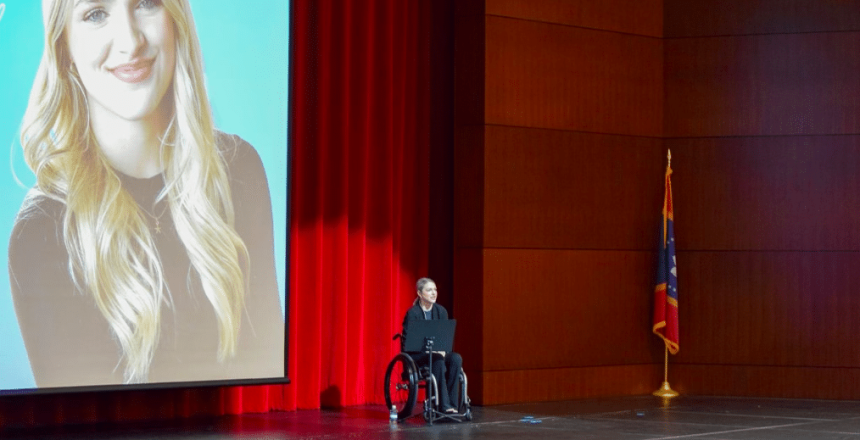
Paige Roberts has been instrumental in bringing Hope Squad – a national nonprofit that uses a student-to-student model to support adolescents facing mental health challenges – to schools in five of the state’s six southern counties. She contacted lawmakers as soon as she got word of Hope Squad’s application not making it into the final report.
“In any system run by humans, something happened – an error – between the Attorney General’s Office receiving it and it not getting to the review committee,” she said. “When we realized this, I brought it to the attention of both the House and Senate members who were championing this program for us…and that is why the legislators worked on getting [Hope Squad] some money because they knew it was a legitimate program.”
As for the Gulf Coast Center for Nonviolence, the regional center was planning to use the money to partner with other organizations to expand trauma addiction response efforts. Per Roberts’ understanding, it was excluded “for a grammatical error (in the application), and they were never told.”
Finally First, which prioritizes empowering youth in underserved communities to make healthy, informed choices, also applied, according to Mississippi Today. It is unclear why the application did not make it to the review committee.
Some Hope Squad programs now ‘in peril’
Roberts said the $500,000 intended for Hope Squad would have not only helped keep the program in some schools but also expanded it into other parts of the state.
Without the allocation, initiatives that train nominated students to recognize warning signs of distress, reduce mental health stigma, and connect struggling peers with trusted adults will not be readily available in Hancock and Stone counties for the 2026-27 school year.
“In the schools we have in Jackson County, private industry donors did a four-year setting for Hope Squad, but Hancock Couty and Stone County schools had funding we raised only for one year,” Roberts explained. “So, those are the two districts that would be in peril for a year.
“Not to mention the 50 new districts that we would have been able to bring on board (with the funding).”
Roberts said parents have already been calling her, concerned that the program in their local schools will go away.
Apply again
In the same social media post from earlier this month, Gov. Reeves encouraged the Gulf Coast Center for Nonviolence, Hope Squad, and Finally First to apply again for opioid settlement funds.
“This is not a final determination that these three entities are not worthy of these funds, it is simply a recognition that they did not comply with the application process in current statute,” he wrote. “I encourage them to apply during the Advisory Council’s 2026 grant cycle so they can be properly evaluated just like the other 125 applications from the 2025 cycle.”
In a Wednesday night statement, following the legislature’s failure to override Reeves’ line-item vetoes, MaryAsa Lee, a spokesperson for the Mississippi Attorney General’s Office, echoed those sentiments.
“The Attorney General’s Office is committed to doing everything we can to get the money out to where it is needed quickly and to assisting the Council as we move into the next round of funding,” she said.
The next round of applications is expected to open in August. The state received nearly $300 million from companies accused of contributing to overdose deaths, with that money to be made available for abatement purposes through 2040.