


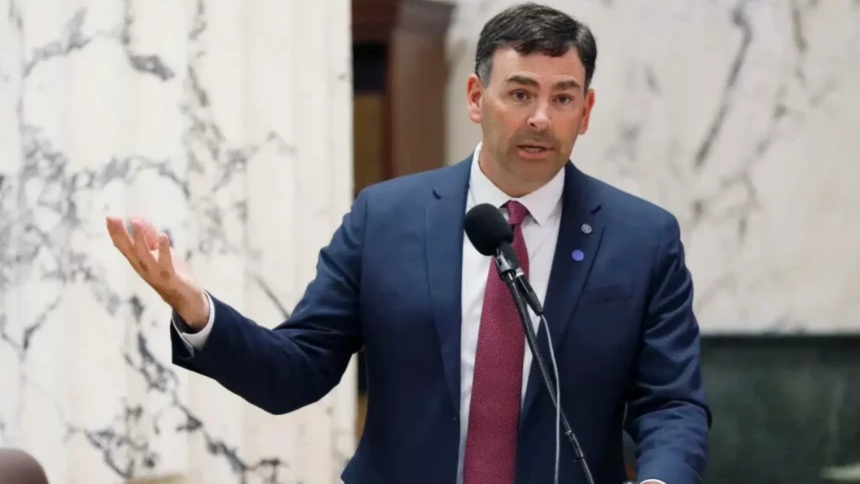
Mississippi Secretary of State Michael Watson did not necessarily love a U.S. Supreme Court ruling allowing states to count late-arriving ballots after election day, but he appreciated that the decision upheld a principle of federalism.
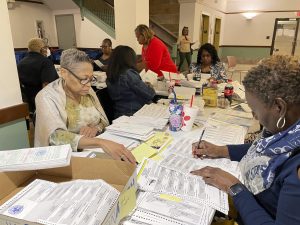
The 5-4 SCOTUS ruling happened Monday and stemmed from a lawsuit filed by the Republican National Committee challenging a Mississippi law passed in 2020 allowing absentee ballots postmarked by election day to be counted up to five business days after an election. The law was enacted in Mississippi in the wake of the COVID-19 pandemic, with it serving to safeguard votes cast by mail.

The challenge to the law and others like it came as President Donald Trump and other notable GOP figures arguing that election day should be sacred, and that allowing late-arriving ballots to be counted could open the floodgates for fraud. Proponents of the extended window for absentee ballots to be counted after election day say it allows military members stationed overseas, elderly citizens, and others to have their votes count, even in the event that mail is delayed.
Watson, a candidate for lieutenant governor, is not confident other states will hold elections in good faith with the added time to count ballots. Citing California, a state that allows late-arriving ballots to be counted one week after election day, Watson said that such policies cause voters to question elections altogether. However, he respects the high court’s view that states have the right to oversee elections, a federalist stance delineating different powers local and federal governments possess.
“Although policies in states like California often undermine confidence in election integrity, the Supreme Court’s ruling confirms that is a decision to be made by Congress or, in its absence, state legislatures,” Watson said.
Watson, whose name was attached to the SCOTUS case, was surprised that the court ruled as it did. The outcome required two justices appointed by Republican presidents, Amy Coney Barrett and John Roberts, to solidify the narrow final tally. It also required prevailing justices to assess the constitutionality of the idea that states can allow ballots to be counted after election day, despite hearing arguments to the contrary that Watson admitted to be stronger than what his team had contended.
“[I was] extremely surprised,” Watson said of the ruling. “I thought that their attorneys outperformed ours a touch. I thought that the questions that were asked and the way that they were answered, it just seemed to me that the writing was on the wall as to what the decision would be.”
Recognizing that he may get flak from his Republican colleagues for both standing up for the law Mississippi has on the books and defending SCOTUS’ ruling, Watson said he will always do what he thinks is right for his constituents rather than playing to partisan interests.
“It wasn’t a fun case to take. Quite frankly, a lot of folks said, ‘Nah, we’re not doing that.’ But I felt like Mississippi needed to do the right thing,” Watson said, noting that it is his job to defend voter laws as they stand. “Come what may, I’ve tried to always position myself to make decisions based on what I thought was right. Politically, if that sends me home, so be it. I’m not here to make a name for myself. I’m here to do what’s right for Mississippians.”
Mississippi governor calls for legislative reform
Immediately after the ruling, Gov. Tate Reeves tasked the Republican-led state legislature with coming up with a plan to repeal the late-arriving ballot law. Instead of accepting and counting ballots that arrive five business days after an election, Reeves said mail-in ballots should be received by each voter’s respective circuit clerk by 5 p.m. on election day for the vote to count. Otherwise, it would be nullified.
“Next session, I call on the Mississippi Legislature to repeal the COVID-era law and require mail-in ballots to be received by the clerk by 5:00 p.m. on Election Day in order to be counted,” Reeves said.
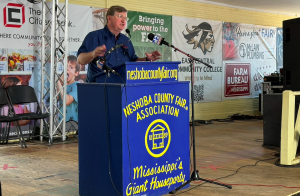
Though frustrated with the court’s decision, and the fact that two justices often labeled as conservatives went against Trump and the national Republican party, Reeves called on Mississippians to respect the judicial branch.
“While I disagree with Justice Roberts and Justice Barrett joining the three liberal justices to form the 5-4 majority in today’s SCOTUS ruling, we’re not going to try to delegitimize the Court, dox the justices or show up at their homes, picket in the streets, or make ridiculous calls to pack the Court in the future,” Reeves continued. “But just because the Court ruled the practice constitutional doesn’t mean we should allow it in our state.”
Mississippi Democratic Party disagrees with governor’s call
Mississippi Democratic Party Chairman Cheikh Taylor, a state representative from Starkville, promptly blasted the governor’s proposal as reckless, arguing that the proposed legislative reform would put votes cast by military members in jeopardy.
“The absentee ballot grace period Gov. Reeves wants to eliminate exists, in significant part, because members of the military serving away from home face unique and unavoidable challenges in casting their ballots,” Taylor said. “Military and overseas voters are required by federal law to request absentee ballots 45 days before a federal election. They fill out those ballots. They mail them on time. And then they wait, because military mail moves on military time, not on a schedule designed for the convenience of politicians in Jackson.”
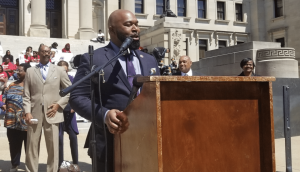
Taylor further asserted that military and overseas ballots were rejected for late arrival at more than eight times the rate of ballots mailed domestically — a problem he accuses Reeves of seeking to make permanent.
“Gov. Reeves talks about supporting our troops at every campaign stop and every Fourth of July photo opportunity,” Taylor concluded. “But when the Supreme Court of the United States said that a deployed sailor’s ballot must be counted, he called it wrong and demanded the Legislature make sure those votes don’t count. You don’t get to put a flag on everything and then work to throw military ballots in the trash. Mississippi service members deserve better than that.”