


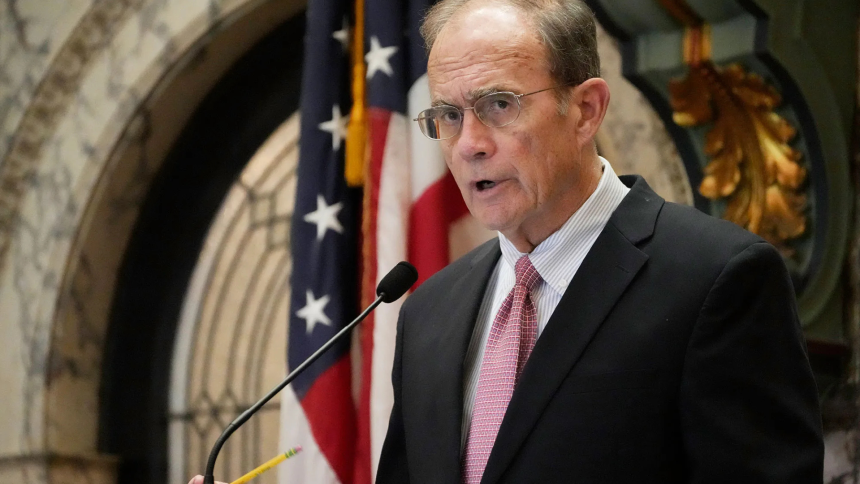
Mississippi Lt. Gov. Delbert Hosemann is not a fan of mobile sports betting — and he made that stance quite clear this week.
Hosemann took to social media on Tuesday to outline exactly why he’s opposed to the concept of Mississippians placing wagers from their personal devices outside of the four walls of a casino, arguing that it ups the odds of addiction and suicide while harming the state’s existing gaming industry.

“Mobile sports betting wouldn’t create a single job for Mississippians and comes with a social cost that is of increasing concern,” Hosemann wrote. “The Senate should continue to reject this harmful legislation.”
This stance likely pits Hosemann against fellow Republican House Speaker Jason White, who has been an ardent supporter of legalizing mobile sports betting. Since taking over as speaker in 2024, legalization has been one of White’s top priorities. It’s an issue that he’s pressed repeatedly to no avail, with Hosemann’s strong dissent seemingly proving why the initiative has been squashed numerous times.
On the ethics side of things, Hosemann raises concerns that legal mobile sports betting could play a role in suicide attempts spiking, along with other dangerously addictive behaviors prevailing in larger numbers than normal.
“Online mobile sports betting increases the risk of gambling-related harm and addiction compared with traditional in-person betting (roughly 1 in 5 people with problem gambler disorder attempt suicide),” Hosemann wrote. “Our young adults are particularly susceptible and can receive push notifications to bet on their phones 24/7.”
The furthest Mississippi has dove into the legalization of mobile sports betting is allowing it to occur within the geofenced confines of the state’s existing 30 casinos. Outside of that, a study committee was created in 2024 to assess the impact of mobile sports betting in Mississippi. Officials on the committee received mixed feedback from industry leaders, with roughly half of casino administrators supporting legalization with the other half opposing it.
White’s argument in favor of mobile sports betting has been that people are already placing wagers illegally and that legalization would allow the state to access an untapped source of revenue. To protect brick-and-mortar casinos, lawmakers proposed forcing mobile sports betting platforms (DraftKings, FanDuel, BetMGM, etc.) to partner with Mississippi casinos so that both parties would benefit financially.
With casinos already offering sports betting in-house, the infrastructure to extend that service statewide would be possible. Mississippi Gaming Commission Executive Director Jay McDaniel has even suggested casinos sync their mobile sports betting service to a visitor’s rewards platform to entice more foot traffic by way of a free meal, hotel room, or other incentives that would draw them to their location.
Still, Hosemann does not see the appeal. Mississippi has a vibrant casino industry, boasting tens of thousands of employees and billions of dollars being generated annually. And the local economies of areas like Vicksburg and the Gulf Coast especially thrive off of the money casinos reel in. To Hosemann, legalizing mobile sports betting would not create new jobs, while simultaneously serving as a competitor to the brick and mortars.
“Mobile sports betting could undermine the billions of dollars invested in brick-and-mortar gaming facilities across our state, increase opportunities for misconduct and illegal actions involving athletes, and raise serious questions about whether the resulting tax revenue would even be sufficient to offset the associated social and economic costs,” Hosemann continued.
During the 2026 legislative session, the House of Representatives passed a bill that not only required mobile sports betting platforms to partner with local casinos but also served to set aside a $6 million pool of cash to be given to any casino that experienced revenue shortages spurred by a decline in in-person attendance.
Hosemann, though, maintained that the risk is not worth the reward, as he said the amount of money mobile sports betting would bring to Mississippi has not been clearly articulated, nor would it be enough to make up for the toll he believes it would take on vulnerable residents.
SuperTalk Mississippi News reached out to White’s team for a response to the lieutenant governor’s comments but did not hear back by the time of publication.