



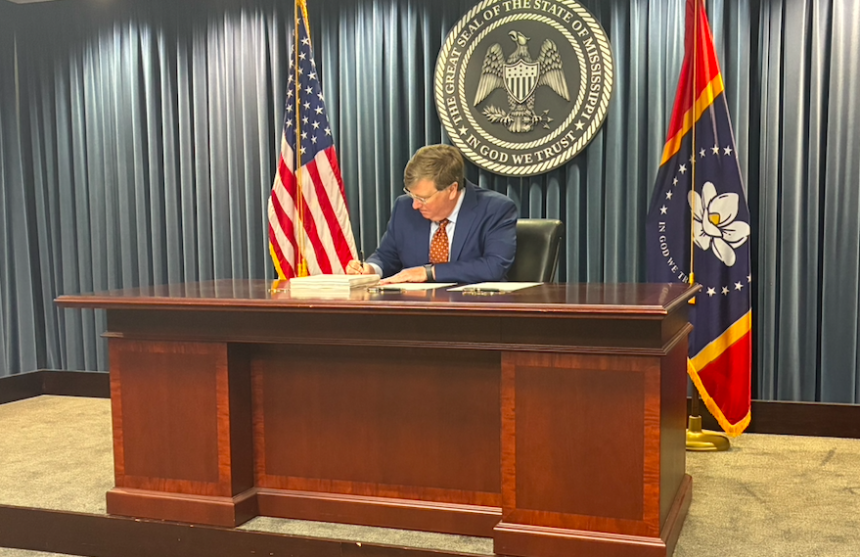
Mississippi Gov. Tate Reeves has signed into law a sweeping youth court reform package.
The legislation was passed during a two-day special session earlier this week and entailed three bills aimed at installing full-time judges to handle youth court cases, adding capacity to the state’s youth correctional facility, building more youth detention centers, and creating a statewide intervention system.

“Thanks to this common sense legislation, our state will enhance its ability to help kids who are abused and neglected and continue the meaningful progress being made at the Mississippi Department of Child Protection Services,” Reeves told the media on Friday. “Our state will be able to maintain law and order, while also preserving Mississippians’ right to due process. It will allow our state to help the youths who are able to be helped, while also holding those who cannot be helped accountable.”
The youth court proposal was crafted to serve multiple purposes, according to Reeves: to better serve families with judges assigned to youth courts statewide, to meet the immediate needs of children who are victims of abuse, to offer rehabilitative services to youth who have committed nonviolent offenses, and to hold minors convicted of committing violent crimes accountable.
Currently, just 24 of Mississippi’s 82 counties have full-time judges assigned to youth court cases. Some counties lean on referees, typically local attorneys appointed by a chancery court judge, to hear these cases. The legislative proposal would shift Mississippi’s youth court approach to one that has full-time judges assigned to cases statewide. This includes creating new chancellor positions for counties lacking these judges, a move that would go into effect in the summer of 2027.
In essence, youth courts would become divisions of a county’s chancery court. However, the 24 counties with strong youth court systems in effect would not be required to shift to the new format, but would have the option to do so if they desired.
Within these youth courts, the proposal would require a judge’s oral order to be drafted in written form, so that families would have full access to what the court is requiring of their child. These courts would also have exclusive jurisdiction over truancy cases, an issue Republican Lt. Gov. Delbert Hosemann has been sounding the alarm on for years.