



A Mississippi Delta city’s mayor and board of aldermen are backing the appointment of a Muslim judge to a municipal court seat.
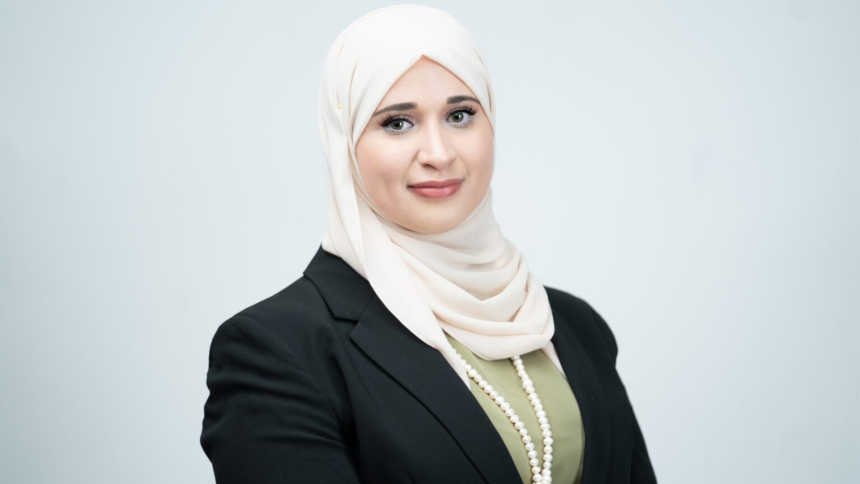
Assma Ali, a Ridgeland-based immigration attorney, was sworn in as a municipal judge in the small town of Benoit, which has a population just shy of 350 people. Her appointment sparked online rumors, hateful commentary, and even alleged threats.

But despite all the outside noise, Benoit officials are standing behind the decision to add her to the bench.
“Ali is an American born citizen. Ali is a graduate of Mississippi Christian University School of Law (formerly Mississippi College School of Law). Ali successfully passed the Mississippi Bar. Ali is a licensed Attorney in the State of Mississippi and is in good standing with said Bar,” a portion of a joint statement by Benoit Mayor Linda Carter and the board of aldermen reads.
Some online posts suggested over the weekend that Ali had been appointed to municipal judgeship in Ridgeland and Lumberton, both Mississippi cities that reside nowhere near Benoit. Officials in the two cities quickly dispelled the allegations, noting that they had not made any recent municipal judge appointments.
Beyond that, a large percentage of the criticism surrounding Ali’s appointment came from partisan commentary from users who have expressed staunch support for President Donald Trump and espoused ultra-conservative viewpoints, with the acronym “MAGA” (Make America Great Again) being a common theme in their social media bios. Many of the users attacked Ali for her Muslim faith and contended that she would use her platform to implement Sharia Law in Mississippi.

Sharia Law refers to the religious and moral legal system of Islam, derived from Quran and the Hadith, or the teachings and practices of the Islamic prophet Muhammad.
The users’ justification for their contentions stemmed from Ali’s garb. The attorney wears a hijab, a headscarf that covers the hair, neck, and ears while leaving the face open, for religious purposes. Another basis for the criticism arose from the unsubstantiated notion that Ali is a Yemeni “radical Islamist” with ties to an individual linked to the Muslim Brotherhood, a transnational Sunni Islamist organization that aims to establish governance based on Islamic principles.
Ali, however, noted that she was born in the United States and would use her platform to uphold the U.S. Constitution, along with Mississippi state law. It’s also worth noting that Ali received her law degree from Mississippi Christian University, formerly Mississippi College, and has been recognized by the Mississippi Bar for her leadership.
“Religion is not listed as a qualification for service as a Municipal Court Judge in the State of Mississippi,” the statement from Benoit officials further reads.
“Being Muslim is not a lawful basis for denying or terminating the appointment. Based on such, she meets the qualifications to serve as a Municipal Court Judge in the State of Mississippi and for the City of Benoit (or any other city in Mississippi for that matter) and we are pleased to have her. We are hopeful that we can now move forward for the benefit of the citizens of Benoit.”
As a municipal judge, Ali will handle misdemeanor crimes, local ordinance violations, and traffic tickets at the city level. She will manage initial appearances, set bonds, issue search or arrest warrants, impose fines or community service, and could even perform wedding ceremonies.
Mississippi GOP chair speaks out
While most of the harsh rhetoric surrounding Ali’s appointment has come from the political right, one notable Mississippi Republican is calling on the public to refrain casting aspersions. Mike Hurst, who chairs the Mississippi Republican Party, said he respects the wishes of Benoit’s leadership and will judge Ali based on how she operates from the bench, rather than her appearance or religion.
“I think we need to just cool our jets a little bit and look at what’s going on,” Hurst said. “These individuals in Benoit have selected someone to be their local municipal judge to rule over things like traffic tickets, and maybe public drunkenness or things like that. Let’s just see where this goes.”

Hurst added that he’s found no evidence to suggest Ali would operate with ulterior motives. In his opinion, the residents of Benoit elected their mayor and aldermen, and those officials are free to govern however their constituents see fit. If that includes making Ali, who meets the qualifications for municipal judgeship, a judge, then that’s their prerogative.
“I do not see anything that’s been reported where she is trying to introduce or impose Sharia Law in the big city of Benoit,” Hurst said sarcastically. “We, as conservatives, believe that the best form of government is the local government. And so, when individuals in Benoit make a choice we disagree with, that’s the citizens of Benoit’s problem that they need to deal with — or it’s their solution, depending on how you look at it.”