



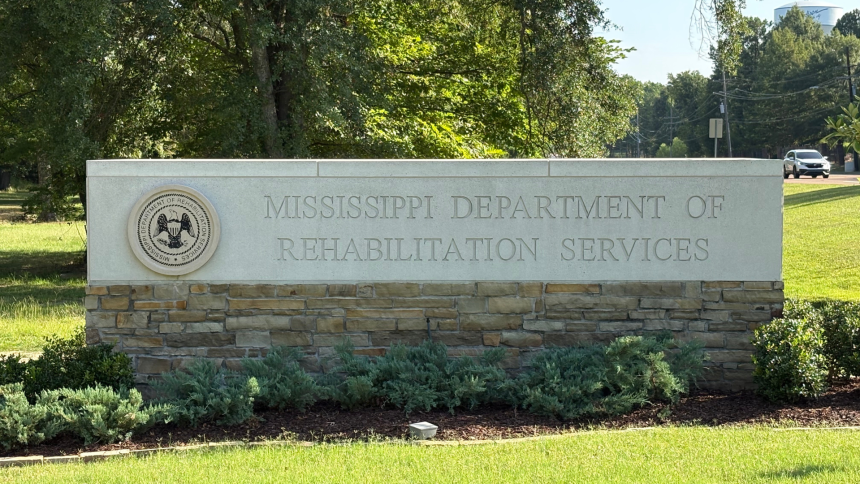
A program within the Mississippi Department of Rehabilitation Services will soon celebrate 90 years of providing jobs to more than 1,700 visually impaired Mississippians annually.
The Randolph-Sheppard Program was created following the signing of the Randolph-Sheppard Act in 1936. The program gives blind individuals and those with severe visual impairments across the country priority for work in vending and cafeterias in state and federal buildings.

The first instance of a blind vendor who received his role from the Randolph-Sheppard Program was in the Vicksburg Post Office, where he worked for over 30 years. Since then, according to the MDRS, there are 232 locations in Mississippi where legally blind individuals can work.
“They are trained and licensed blind vendors,” Dorothy Young from the MDRS Office of Vocational Rehab for the Blind said on Mornings with Richard Cross. “That means they have gone through training through our agency. It’s a nearly six-month training program where they learn how to work with their blindness, and then we take them through small-business and hospitality training. Once they finish all of that, then they’re awarded their license.”
Once licensed, most blind vendors work in cafeterias in places like the Mississippi Department of Transportation or Employment Security, but not Ed Turner. Turner, one of the legally blind workers helped by the Randolph-Sheppard Program, worked at Naval Air Station Meridian for 21 years before his recent switch to Keesler Air Force Base, where he is in a leadership role serving food on-base.
“I have around 160 employees that are cooks, bus people, dishwashers. I have about 14 managers and supervisors who assist us seven days a week,” Turner said. “They’re working with me day-to-day to make sure that I know how to run it just as well as they do. So, I oversee everything, from making sure nothing’s dirty to making sure everyone’s fed. We serve 4,500 meals a day. Blind people can do just about anything anybody else can do.”
Turner is one of many examples of visually impaired citizens who have been helped by the Randolph-Sheppard Program, and the Office of Vocational Rehab for the Blind has no plans of stopping its mission of providing employment to the legally blind.
“We just put back to work 289 individuals in our great state that are now taxpayers, and when we close those cases, individuals were earning over $19 an hour,” Young said. “So I just want that to be said about the great work that our agency does at the MDRS.”
To celebrate 90 years and all the success the program has achieved, the MDRS is hosting a conference Sept. 10-12 in Flowood. On Sept. 10, they will have a full day of events, food, and speakers discussing the history and the work of the Randolph-Sheppard Program. Sept. 11 will be a day of training for blind individuals, with Sept. 12 capping off the weekend with a gala at Table 100.
“90 years of individuals in our state that are legally blind that have gotten up every morning and went to work filling vending machines or operating cafeterias, and they did not let their vision stop them from being taxpayers in our great state,” Young said.