



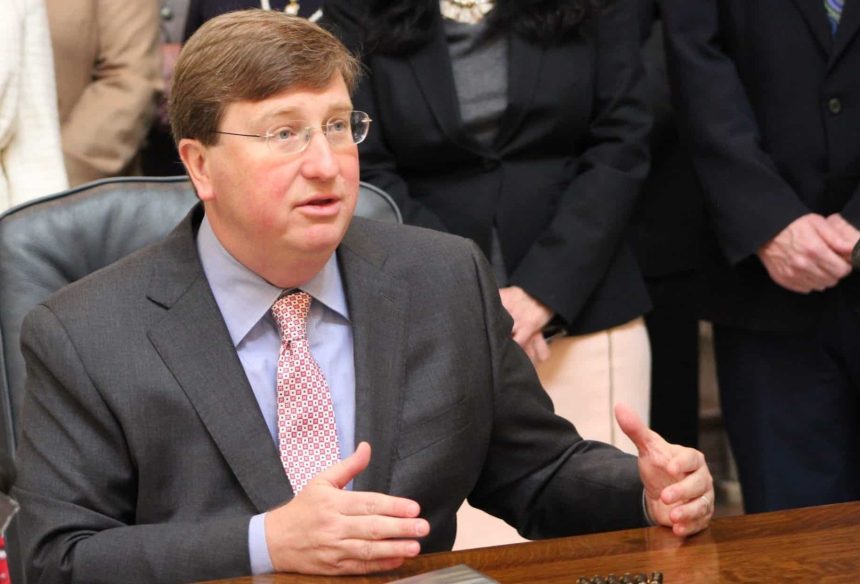
On Wednesday, Gov. Tate Reeves announced the establishment of a new office that will be charged with implementing a rural health plan in Mississippi, which is being funded by the federal government.
The Republican governor unveiled plans for the Mississippi Rural Health Transformation Program in November with the goal of giving every resident in rural areas reliable access to healthcare by 2031. The state received nearly $206 million in funding for the program in December.

The new Mississippi Rural Health Transformation Program Office will be housed within the governor’s office and “serve as the central hub for coordinating implementation of the State’s approved plan, ensuring alignment across agencies, managing program administration, and maintaining a strong focus on accountability and results,” a press release from Reeves’ office explained.
The release added that an accompanying website – mississippirhtp.com – has been launched to ensure transparency by allowing residents to view initiatives, funding opportunities, and progress of the program.
“This is a massive step forward for healthcare in Mississippi,” Reeves said. “By establishing a dedicated office and launching this website, we are putting the structure and transparency in place to deliver real, lasting improvements for our rural communities.”
Additionally, Richard Grimes was named project director of the new office. Grimes is a certified public accountant who has built his career on guiding healthcare initiatives. He previously worked as chief financial officer for the Mississippi Hospital Association.
What is the Mississippi Rural Health Transformation Program?
The program stems from President Donald Trump’s “One Big Beautiful Bill,” which was signed into law last summer. The sweeping reconciliation bill established a $50 billion fund to be distributed to states over the next five years, in part to help states respond to Medicaid reductions included in the same bill.
Mississippi submitted its plan after input from stakeholders such as the state Department of Health, per Reeves, and it was approved by federal authorities. The plan is broken into six initiatives with the following being provided by the governor’s office:
- Statewide Rural Health Assessment: Mississippi will engage a third party to conduct a comprehensive statewide assessment of rural healthcare needs, both presently and in the long-term future.
- Coordinated Regional Integrated Systems Initiative: The initiative is designed to create a connected, data-driven network of emergency, clinical, and community-based services.
- Workforce Expansion Initiative: The initiative is designed to use targeted programs to address recruitment, retention, training, and career pathway development for healthcare professionals.
- Health Technology Advancement and Modernization Initiative: The initiative is designed to modernize rural healthcare systems by strengthening the digital infrastructure that supports high-quality, coordinated, and secure care.
- Telehealth Adoption and Provider Support Initiative: The initiative is designed to increase virtual care access, supporting providers in adopting telehealth, and exploring innovative payment models. Investments aim to enhance connectivity, technology, and diagnostic tools to enable real-time remote care.
- Building Rural Infrastructure for Delivery, Growth, and Efficiency Initiative: The initiative is designed to improve access to specialized care, close care gaps, and support innovative pilot programs that enhance healthcare delivery and improve outcomes. The initiative focuses on building physical, operational, and programmatic capacity to address unmet needs, improve care coordination, and foster sustainable rural healthcare systems.
When fully implemented, the plan is intended to ensure every rural Mississippian has reliable access to quality healthcare services by 2031. Over half the state’s residents live in rural areas with scattered care, per the Rural Health Information Hub.
Lawmakers initially wanted more oversight
State lawmakers passed a bill during this year’s regular session to increase legislative oversight over the federal money coming in for the Mississippi Rural Health Transformation Program, but Reeves vetoed the legislation, arguing the state does not have time for a lengthy bidding process before a federal deadline requiring funds to be obligated by Oct. 30.
The bill was authored by Sen. Hob Bryan, D-Amory, and later substituted with similar language from Rep. Sam Creekmore, R-New Albany, to require that funds go through the state’s competitive bidding process and prioritized so-called “super rural” areas.
With lawmakers having a chance to override the veto during a one-day reconvening earlier this month, Reeves made a full-court press in the days leading up to it that included several social media tirades. The House signaled readiness to vote on an override, but Republican Lt. Gov. Delbert Hosemann and Senate leaders chose not to bring it to their floor.
In the release announcing the new program office and its website, Reeves’s office commended itself for pushing back on the bill and assured all program funds are subject to federal oversight.
“All program funds are subject to the federal procurement, monitoring, and audit requirements…as well as the oversight and approval of the Centers for Medicare & Medicaid Services,” the release said. “Gov. Reeves and his staff worked to address and push back on proposed state legislation that could have introduced unnecessary complexity or slowed implementation, ensuring the state remains well-positioned to execute its vision effectively.”