



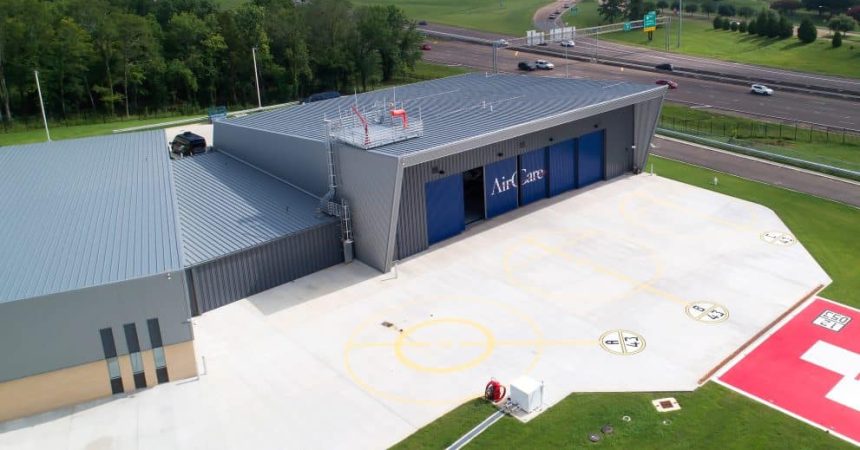
The University of Mississippi Medical Center is expanding its air care operations.
Officials with the state’s largest hospital system announced Tuesday that its AirCare flight team is adding an airplane to its fleet, which currently only consists of helicopters, and is looking to hire 10 new medical staff personnel to assist with the new service.

The aircraft, a Pilatus PC-12 provided through the medical center’s partnership with Global Medical Response, the nation’s largest air and ground emergency medical services provider, will become the fifth vehicle in the AirCare fleet, expanding the program’s ability to provide in-state and regional patient transport.
“Adding a fixed-wing aircraft is a natural evolution for AirCare and gives us another tool to serve patients across Mississippi and the surrounding region,” said Jeremy Benson, director of the Mississippi Center for Emergency Services and program director for AirCare. “It allows us to move patients safely and efficiently over longer distances, particularly when rotor-wing transport may not be the most practical option.”
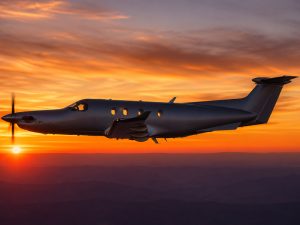
AirCare routinely receives transport requests involving patients who require specialized care not readily available in their local communities. The addition of an airplane enhances the medical center’s ability to support these kinds of missions across Mississippi and the surrounding region, including long-distance transports from neighboring states to the hospital’s Level I trauma center and other advanced specialty services.
“Often, we see patients who need access to a higher level of specialized care, and distance can become a real operational barrier,” Benson said. “This fixed-wing asset helps us bridge that gap. It gives AirCare the ability to reach farther, support our partner hospitals more effectively and bring patients to the right level of care in a safe, timely and efficient manner.”
The airplane is configured to transport one patient while providing expanded cabin space for the medical crew, equipment, and mission-specific supplies. Its increased range, carrying capacity, and weather-capable features enhance AirCare’s ability to safely complete longer-distance transports and operate in conditions that may limit helicopters, officials say.
“We are proud to partner with the University of Mississippi Medical Center AirCare on the expansion of their flight program,” said Billy Casey, regional director of Global Medical Response. “This important addition strengthens their capacity to provide exceptional clinical care to communities across Mississippi and neighboring states.”
AirCare is currently hiring for several positions to support the expansion of the flight program, including flight paramedic, critical care paramedic, and registered nurse flight roles.