



A new report highlights which animals are most likely to kill someone in each U.S. state – but what is Mississippi’s?
World Population Review revealed its updated 2026 list, ranging from predators like grizzly bears (Montana, Idaho, Washington) and moose (Colorado, Maine, New Hampshire, Vermont) to animals like whitetail deer (Pennsylvania, Arkansas, Ohio, West Virginia) and dogs (Alaska), and even some sea creatures such as man-of-war jellyfish (Delaware, North Carolina).

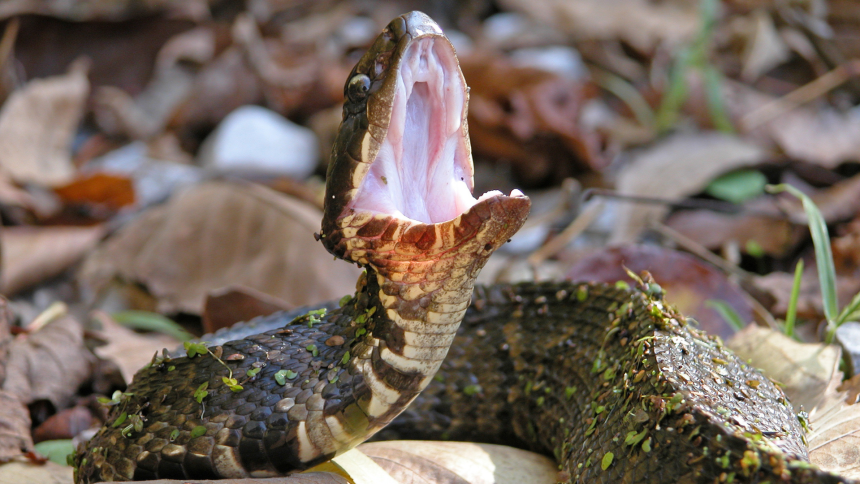
The deadliest animal in the Magnolia State, however, was in a different category from the others already listed, but it makes up the most-represented group on the list. The cottonmouth snake takes the cake for Mississippi as the animal that is most likely to lead to death.
Along with 14 other types of snakes on the demographic data platform’s list, cottonmouths, also known as water moccasins, are venomous, semi-aquatic snakes known for the cotton-colored interior of their mouths.
Juvenile cottonmouths are easier to spot, having bright yellow or green tail tips with vibrant reddish crossband patterns that fade with age as they become completely dark and unpatterned. The average size of an adult cottonmouth is between three and four feet.
As a member of the viper family, cottonmouths have a facial pit for sensing heat, but it does not possess a rattle, so make sure to check near your feet when walking near wet areas of the state to avoid encountering the most aquatic venomous snake in North America. Found across the state, cottonmouth venom has been medically documented numerous times in Mississippi to have serious health implications.
According to the North Carolina Wildlife Resources Commission, pit viper snakes like cottonmouths are shy creatures that do not pose a threat when left alone. But if you do have a chance encounter with one, they have a solution.
“The best plan is to leave the snake alone and give it plenty of space. In most cases, given time, the snake will move out of the area on its own,” the N.C. Wildlife Resources Commission wrote. “Like all reptiles, snakes are cold-blooded, meaning that their internal temperatures follow that of the ambient temperatures where they are found. On a cool day, a snake encountered basking may not yet have the energy to move away from you, so it may require more time and warmer temperatures before it can retreat.”
At the end of the day, it’s a good policy to be aware of your surroundings in Mississippi when near water to avoid contact with the state’s deadliest animal.