



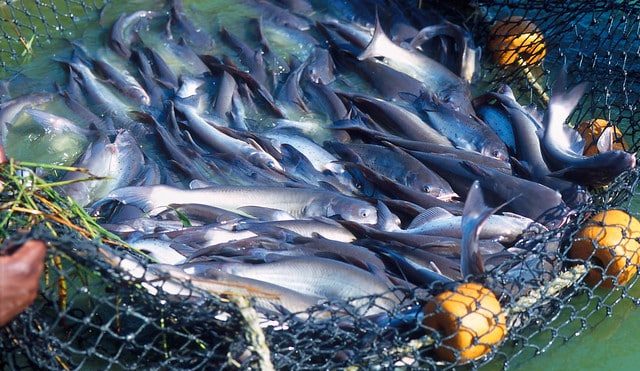
Mississippi’s U.S. senators are urging federal agriculture officials to action before a pair of viruses threaten local farm-raised catfish.
Sens. Roger Wicker and Cindy Hyde-Smith, both Republicans, joined three of their colleagues in penning a letter to U.S. Agriculture Secretary Brooke Rollins asking the U.S. Department of Agriculture to take action with regard to the Yellow Catfish Virus and Channel Catfish Virus before the ailments affect local aquaculture operations.

U.S. Sens Katie Britt (R-Ala.), Tommy Tuberville (R-Ala.), and Tom Cotton (R-Ark.) joined the Mississippi lawmakers in sending the letter.
Yellow Catfish Virus, first identified in Chinese aquaculture operations in 2020, can remain viable during freezing and thawing, suggesting potential pathways for introduction into the U.S. Officials say the virus has been shown to have mortality rates approaching 90% in infected populations and is believed to be highly contagious. It’s not yet present in the U.S., and officials want to keep it that way.
Channel Catfish Virus is a highly pathogenic ailment already known to be in the U.S. Agriculture officials warn that the virus primarily affects young channel and blue catfish, both native to Mississippi, and can cause mortality rates exceeding 80% in commercial aquaculture hatcheries and nursery ponds.
“The domestic catfish industry is a critical component of the broader agriculture economy in the Southeast, supporting rural economies, providing jobs, and contributing to national food security,” the senators jointly wrote. “An outbreak of a highly pathogenic virus such as [Yellow Catfish Virus] or [Channel Catfish Virus] could have devastating economic and ecological consequences.”
The senators are calling on the USDA’s Animal and Plant Health Inspection Service to ensure that catfish being imported into the U.S. from other countries are free of both viruses. The lawmakers also want the federal agency to work with international trade partners to institute “effective surveillance, biosecurity, and certification measures” to prevent the export of infected products.
“Countries exporting catfish and related species to the United States should demonstrate all necessary steps to detect, control, and eliminate the presence of [Yellow Catfish Virus] and [Channel Catfish Virus] in their aquaculture systems and processing chains,” the letter continued.

Mississippi Agriculture Commissioner Andy Gipson, though a supporter of Wicker and Hyde-Smith’s push to crack down on the catfish being imported into the U.S., added that consumers ought to be purchasing and eating locally sourced products, rather than foreign-grown ones.
“As always, I encourage people to make sure you’re eating Mississippi and U.S. farm-raised fish. Not only is it a fresher and healthier option, it’s also safe to eat and supports our local farmers. Be sure to look for that domestic label when shopping at grocery stores or ordering at restaurants,” Gipson said. “No one knows catfish like we do here in the South, and I urge consumers to choose safe, high-quality U.S. farm-raised catfish.”
Mississippi leads the nation in farm-raised catfish production. The state’s 129 catfish operations covering more than 28,000 acres produced more than 65% of the nation’s farm-raised catfish. Its production value amounted to $196 million in 2025.