


One Mississippi lawmaker plans to revive an effort to make civics a required course for high schoolers to complete before graduating.
Senate Bill 2292, after passing through its originating chamber with unanimous support, did not make it out of the House of Representatives’ Education Committee ahead of a major deadline. The measure served to require high school pupils in Mississippi to complete a standalone civics course before turning the tassel.

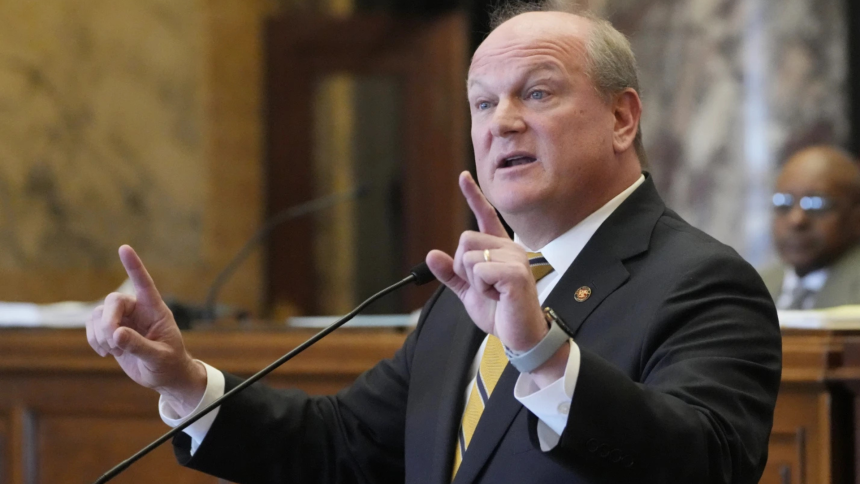
While the legislation may be dead at the moment, it could be revived via a bill that is still alive in the state capitol, which is what Sen. Brice Wiggins, R-Pascagoula, aims to do. SB 2292 not making it to a floor vote in the House was likely a casualty linked to infighting by Republican leadership in both chambers. But similar to what lawmakers did with measures to increase teacher pay, Wiggins is exploring a path to gut another bill and insert the language of his civics proposal.
“My friends in the House chose not to move it. It was obviously referred to the Education Committee, where there’s been a lot of, shall we say, back-and-forth, or maybe no back-and-forth in education,” Wiggins said on MidDays with Gerard Gibert. “It died over there. However, this time of year, you try to find those things, and we’re going to work to get that put back in place. I would ask people to continue to press for that.”
The civics curriculum, according to Wiggins’ proposal, would serve to teach the history, heritage, and civic life of the U.S. and the state of Mississippi. Pupils would learn more about the U.S. Constitution and basic principles of democracy, including the duties of each branch of the federal government, along with the separation of powers. An emphasis would also be placed on how government works at the local level.
Federalism, a form of government that highlights where power is divided from the federal ranks to the state and down to the local level, would be a major focal point of civics courses with the overarching goal of graduating an informed electorate by the time high school seniors earn their diplomas.
Wiggins said his civics proposal has garnered public support, especially in recent days, with mass confusion over a separate legislative measure taking social media by storm. Various posters and influencers erroniously reported online that a bill to exempt name, image, and likeness deals from state income taxes would soon become law in Mississippi because the legislation cleared the House. The measure, however, has not passed in the Senate and has virtually no shot at becoming law.
Nonetheless, to Wiggins, the misinformation surrounding the bill, fueled by a misunderstanding of how the legislative process works, played to his point that Mississippi’s youth desperately need to be taught the basics of how their government works.
“It’s really been unbelievable how much support I’ve had for that bill,” Wiggins said. “Citizens ask for it, teachers have talked to me, educators have messaged me, saying, ‘We need this bill.’ The point is to get educated citizens as they graduate.”
At this time, no bill has been altered to include the civics proposal.