

Mississippi State University is being recognized on the world stage for work rooted deep in the Mississippi Delta.
Analytics platform ScholarGPS ranked MSU as the No. 1 aquaculture institution globally, citing scholarly productivity, research quality, and real-world impact. The recognition reflects more than four decades of service-driven research designed to strengthen one of Mississippi’s most important agricultural industries.

The university’s aquaculture program traces its roots to 1985 when research began at the Delta Research and Extension Center in Stoneville, near the heart of the nation’s catfish industry. Since then, the program has expanded into a nationally integrated operation supported by the Mississippi Agricultural and Forestry Experiment Station, the USDA, and MSU Extension.
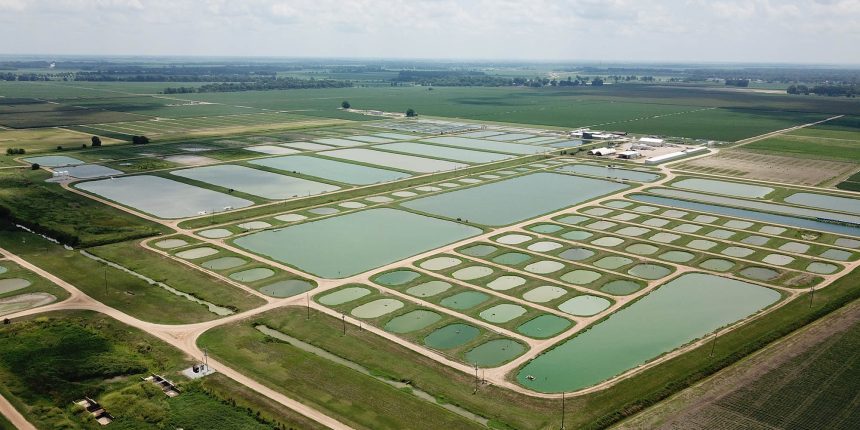
MSU now hosts the Thad Cochran National Warmwater Aquaculture Research Center, a 300-acre research facility that sets the program apart from peer institutions. The center supports interdisciplinary research spanning genetics, nutrition, disease prevention, economics, and environmental sustainability.
Research-driven industry needs
Rather than focusing on research for research’s sake, MSU scientists mention that the program’s success is built on its land-grant mission: helping producers solve real problems.
Nutrition research alone plays a major role. Catfish account for roughly 60% of U.S. fish production, and feed costs make up as much as 60% of production expenses. MSU researchers are studying alternative feed ingredients, nutrient digestibility, and plant-based additives that could reduce costs and limit antibiotic use.
Genetics and production practices have also evolved. MSU and USDA scientists helped develop and refine the hybrid catfish, a cross between blue and channel catfish, now widely credited with improving production efficiency across the industry. New hatchery techniques have increased yields while reducing losses.
Protecting fish, farmers, and consumers
Fish health remains another cornerstone of MSU’s work. The aquaculture program processes more than 700 diagnostic cases annually, helping farmers identify and manage disease outbreaks.
Among the program’s most impactful breakthroughs is an oral vaccine for Enteric Septicemia of Catfish, a disease that once caused major industry losses. Researchers say the vaccine has increased survival rates, boosted growth, and shortened production cycles by as much as a year.
Scientists are also studying bird depredation, water quality, environmental stress, and harvesting methods to ensure fish arrive at processing facilities healthy — and consumers receive a consistently high-quality product.
“Mississippi has become ‘ground zero’ for the catfish industry,” Mississippi Agricultural and Forestry Experiment scientist Dr. Peter Allen noted, adding that U.S.-raised catfish is among the safest and most sustainable protein sources available due to strict regulations and grain-based feed systems.
Economic impact runs deep
Beyond biology, MSU researchers are examining the economics behind aquaculture operations. Catfish farming contributes more than $2 billion annually to the U.S. economy, but regulatory costs and global competition remain challenges.
Researchers say improving efficiency and streamlining regulations could strengthen domestic production, reduce reliance on imports, and improve food security, especially as the U.S. remains the world’s largest seafood market but ranks far lower in aquaculture output.
Industry partnerships play a key role. Groups like Catfish Farmers of America regularly collaborate with MSU scientists to guide research priorities.
More than a ranking
While the ScholarGPS ranking places MSU at the top globally, researchers say the recognition only captures part of the program’s impact, much of which happens quietly through disaster assistance, regulatory guidance, and day-to-day support for producers.
Still, the message is clear: from Stoneville ponds to global scholarship, Mississippi State University is making waves and shaping the future of aquaculture worldwide.