



As cases of the flesh-eating New World screwworm continue to rise nationwide, Mississippi is not currently one of the states plagued by the parasite.
Despite the screwworm only appearing so far in two states – one in New Mexico and the other 19 in Texas – it still poses a potential threat to Mississippi’s food supply. According to Agriculture Commissioner Andy Gipson, it’s only an issue for animal safety, not food safety.

READ MORE: Flesh-eating screwworm poses ‘no threat’ to Mississippi food safety
Jerome Goddard, a Mississippi State University Extension professor of medical entomology, said the screwworm belongs to the blowfly family. Typically, blowflies infest dead animals and lay eggs inside them that eventually develop into larvae, which eat the carcass for nutrients.
The major difference between the screwworm and the rest of the blowfly family is that they infest living things.
“The problem with this particular species of blowfly is that it lays its eggs on living animals and the larvae burrow into living flesh of cattle and other livestock, causing serious damage and sometimes death of the animal,” Goddard said.
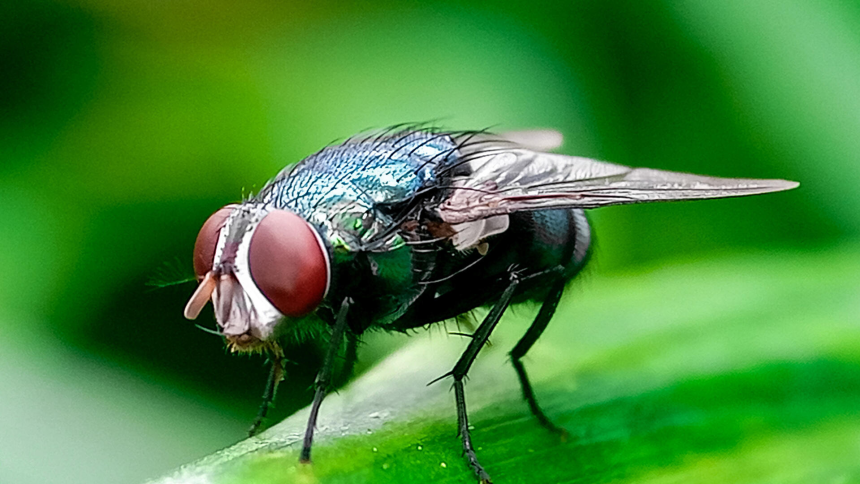
The screwworm has been described as a bluish-green, horsefly-sized insect with golden-yellow cheeks that was recently mistaken for another fly that looks nearly identical but is harmless to living creatures.
“Screwworms used to be endemic in the entire southern half of the U.S., but they were eradicated in the 1960s to 1970s using the sterile male technique,” Goddard said. “This eradication process eliminated this pest from the U.S. all the way down to Central America.”
Despite their eradication in the U.S., they have made comebacks in the past, with the most recent outbreak occurring in 2016 in the Florida Keys. However, Mississippi officials say the state is prepared with a response plan should an incursion occur.
“Our goal at the Board of Animal Health is to develop regulations and to put out information that will help, if possible, prevent the pest from coming back into Mississippi, and if it does, we have been working and planning on how we would respond to this,” Dr. Jim Watson, state veterinarian with the Mississippi Board of Animal Health and Mississippi Department of Agriculture and Commerce said.
“We’re asking for people to inspect their animals frequently. Look for wounds, draining tracks and places where flies land,” he said. “If you see a wound that has maggots or larvae, call your local veterinarian or our office so we can collect samples.”
Not only should farmers with livestock be cautious and aware of the symptoms in animals infested with the screwworm, but pet owners should also check their animals, experts say. Watson reported that, behind cows, dogs are the most susceptible to the screwworm invasion.
“It can seem kind of frightening to animal owners, but it was eradicated back in the ‘60s, and we can do it again,” Watson said.