

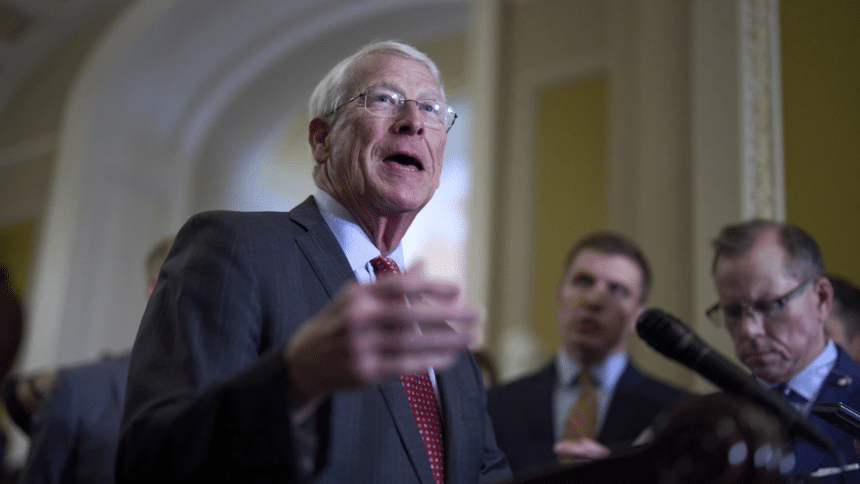
Senate Armed Forces Committee chairman Roger Wicker is blasting the memorandum of understanding recently signed by the U.S. and Iran aimed at ending the war between the two nations.
Wicker, a Republican from Mississippi and longtime ally of President Donald Trump, broke with the administration on Thursday, blasting the agreement as “out of step” with the president’s goals.

The agreement, signed by both nations on Wednesday, will reopen the internationally relevant Strait of Hormuz and bring the two adversaries back to the negotiating table over Iran’s nuclear program during a 60-day halt to the war. It also allows Iran to sell its oil freely again.
Additionally, the interim agreement would allow Iran to get $300 billion in funds, on the condition that it honors its end of the deal, for post-war rebuilding efforts. U.S. Vice President JD Vance confirmed Monday that the money will not come from American taxpayers. Iran, in exchange for the cash, reportedly agreed not to create nuclear weapons and hand over the enriched uranium used to build said bombs.
Wicker took particular issue with that provision, comparing it to the 2015 Iran nuclear deal negotiated under President Barack Obama, which required Iran to significantly reduce its enriched uranium stockpile and unfroze roughly $50 billion in overseas assets, and arguing that the current agreement is even more unfavorable.
“Specifically, the $300 billion fund for the reconstruction and economic development of Iran – though not funded by U.S. taxpayers – would make Iran’s payoff under President Obama’s 2015 deal look like a pittance by comparison,” Wicker said in a statement.

Wicker also took issue with the agreement’s provision that calls for the “immediate and permanent” termination of military operations in Lebanon, a shot directly at Israeli operations in the nation. While Israel officials claim to be attacking Hezbollah, designated as a terrorist organization by the U.S., the operation had reportedly stymied previous peace attempts between the U.S. and Iran since the war begun.
Wicker’s greater concern is that Iran will not adhere to the agreement once it’s received the funding outlined in the MOU. Instead, he believes Iranian officials will use the funding to support violent acts against the U.S. and Israel.
“I believe it would be an error to force Israel to stand down against Hezbollah, an Iranian-backed terrorist organization that continues to attack Israel on its northern border,” Wicker said. “I also oppose the U.S. lifting any sanctions on Iran, or unfreezing Iranian funds, in exchange for Iran’s mere agreement to negotiate for another 60 days. The Iranian regime has not renounced its ultimate goal — ‘Death to America, Death to Israel.’ The regime will invest every penny it receives to further that aim.”
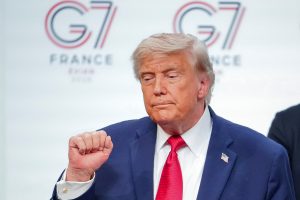
Trump began the war against Iran on Feb. 28 but has been pressured to end it with the effort causing a spike in global oil prices. The U.S. and Iran are now in a 60-day negotiating period, one Trump said could be extended, to iron out a permanent peace deal.